SUSTAINABILITY

We’re proud to be a B Corp.
In March 2023, we became only the second Tasmanian-owned business to achieve B Corp certification. B Corps are businesses that meet independently verified standards of social, cultural and environmental performance, assessed by certifying body B Lab. They differ in size, location and industry, but share a commitment to being financially sustainable while addressing social, economic and environmental challenges.
Certification required a rigorous assessment process, but our existing commitment to frameworks including ISO 14001 (Environmental Management), ISO 9001 (Quality Management) and ISO 45001 (Occupational Health and Safety), a Trace-measured carbon-positive assessment, and our own Sustainability and Reconciliation Action Plans meant much of the groundwork was already in place. To maintain certification, we undertake a thorough reassessment every three years to demonstrate that we continue to meet B Lab’s standards, which are themselves always improving.
B Corp certification does not mean we are perfect, nor that we have achieved our highest impact. It means we are part of a global community of businesses committed to meeting rising standards — and it gives us a framework to measure where we are and keep improving.
View Our B Corp Certification →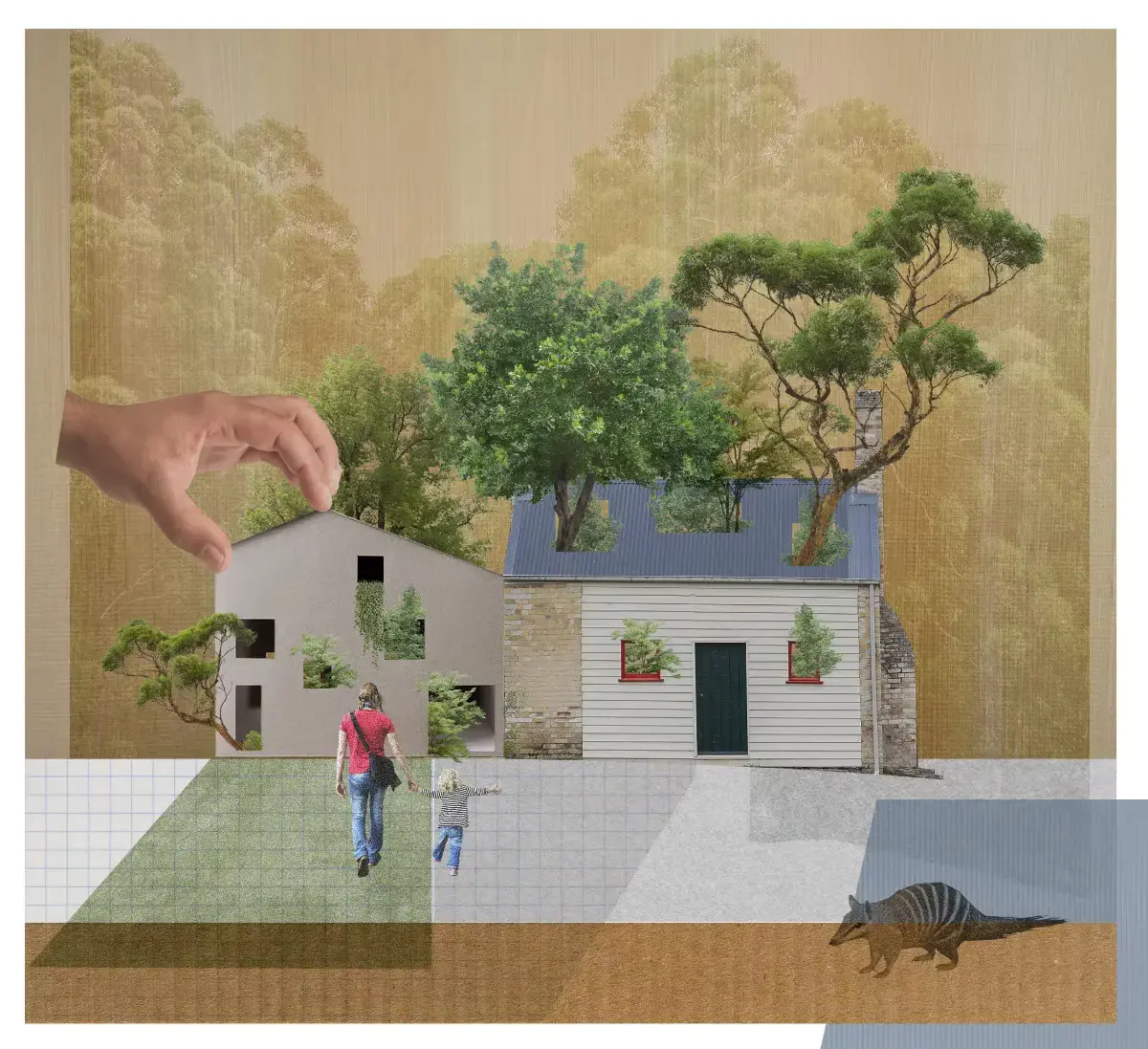
Our Approach
Environmental Design
'Sustainability is not just about doing less harm, it's also about doing more good.' — Jochen Zeitz, philanthropist and sustainability champion
We understand that architecture is an important part of a more sustainable and responsible future, and can shape how our communities interact with the built and natural environment. We consistently aim to find project-specific approaches to ensure the right sustainability outcomes are delivered.
Embedding these principles into the fabric of our business helps to refine our design choices, and encourages open conversation on sustainable solutions to promote positive changes across our industry. Buildings should tread lightly, be robust and resilient to the impacts of climate change, and aim to reduce carbon emissions throughout their life cycles. We rigorously review our projects and designs to ensure we select materials that are low in embodied carbon, and healthy for the environment and users.
As a business, we constantly seek the improvement of our internal operations, looking for innovative solutions to minimise our impact on the environment.
Cumulus is committed to being a more sustainable and equitable practice, and sets performance benchmarks to design and build better than the minimum legal requirements of the National Construction Code.
Our Promise
First Nations Engagement
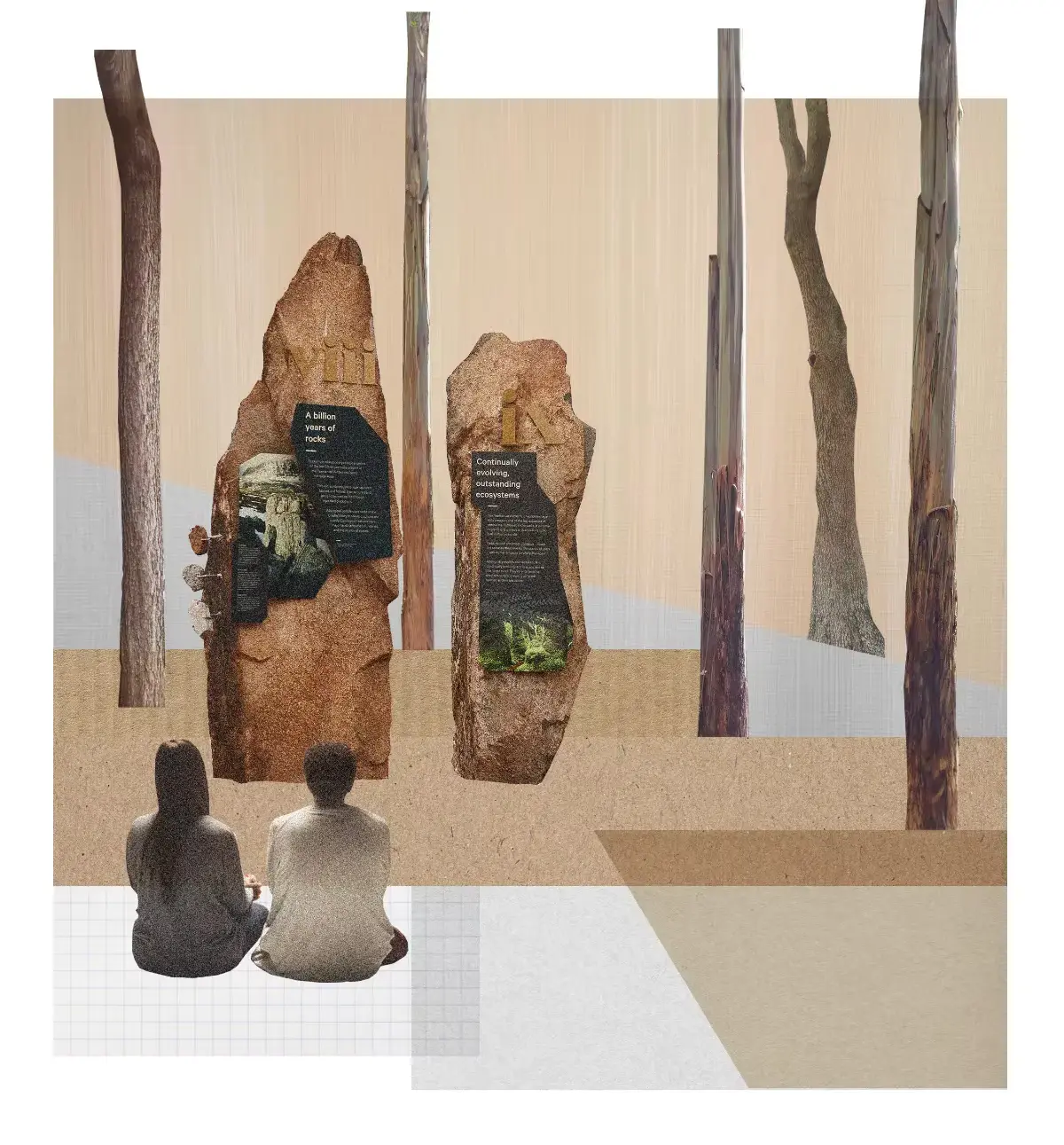
As architects and designers, we understand that all projects, both built and unbuilt, have a relationship with Country. As defined by a Ngunnawal Elder Jude Barlow, Country is everything. It's family, it's life, it's connection. It is a complex system that combines aspects of culture, land, the environment, and identity.
At Cumulus we endeavour to create meaningful architecture and support experiences that have a positive and lasting impact on both people and place. Our core business value of accountability instils a studio-wide practice of acknowledging, supporting, and collaborating with First Nation Australians to develop built outcomes that nurture and celebrate the continuation of centuries of cultures on Country.
Engaging with, learning from, and celebrating First Nation Australians is, to put it plainly, good business. A process of shared benefit that has deeply enriched our work, broadened our thinking, and created outcomes that sit outside the colonial cannon, ones that represent the possibilities and what we believe to be the future of Australian architecture. A built environment that is inclusive and empowered by the many and varied narratives that inform our shared history.
During the project inception stage, we implement an information gathering process whereby we seek to gain an overarching understanding of the possibilities of the site. During this process we aim to work directly with local Aboriginal representatives, communities, and organisations, to ensure that First Nations perspectives inform our designs. This working relationship can inform the project outcome in various ways including but not limited to; conceptual co-design, integrating cultural narratives and knowledge with aboriginal co-authors, traditional land management, re-establishing or maintaining native/endemic habitat, and sensitive and strategic design approaches to important cultural places and stories.
Our studio is committed to embedding a cultural and Caring for Country lens, completing our inaugural Reflect Reconciliation Action Plan in 2024. For us, this document has helped guide our work to create meaningful change in this space.